
Works
About Constant
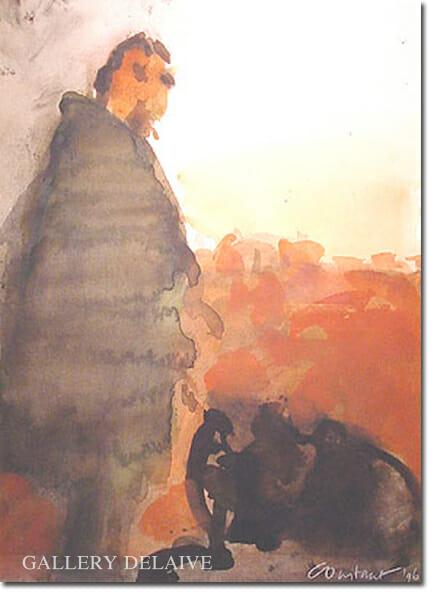
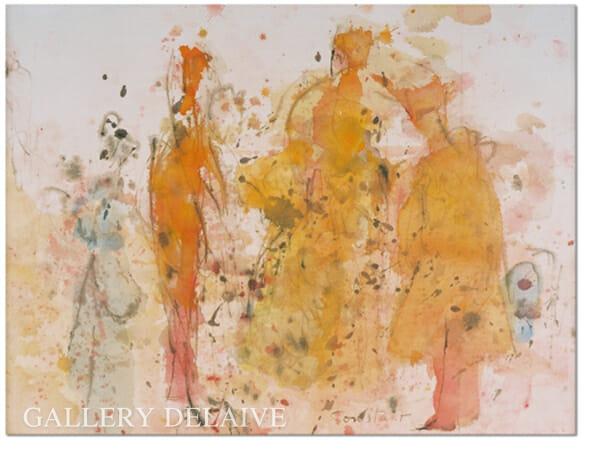
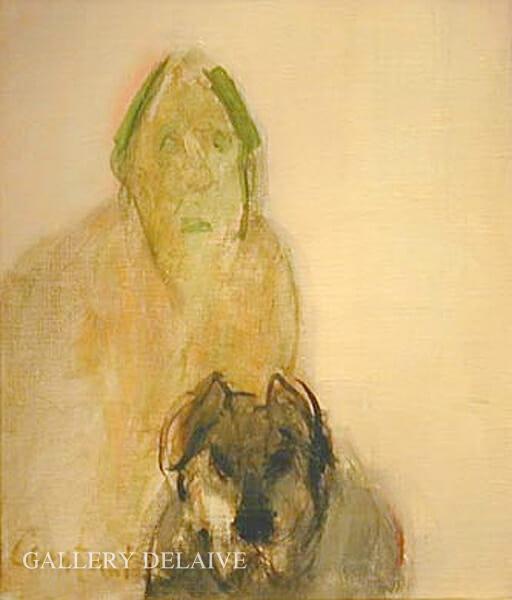
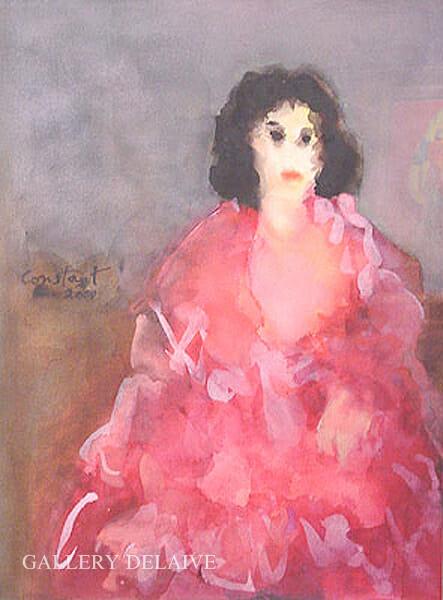
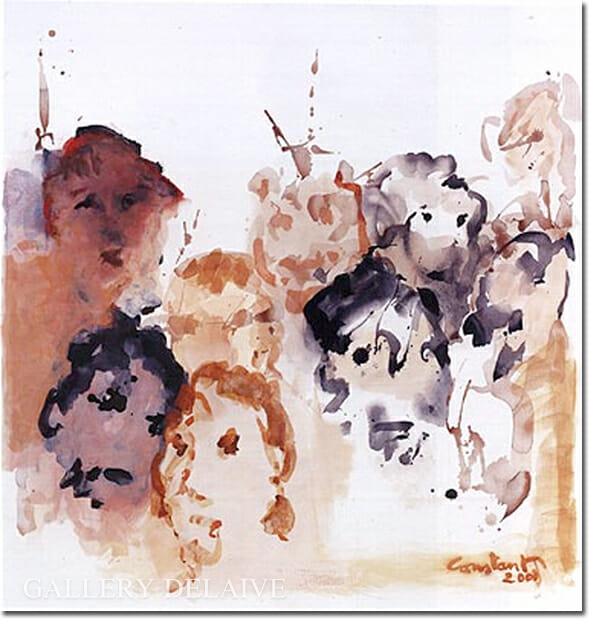
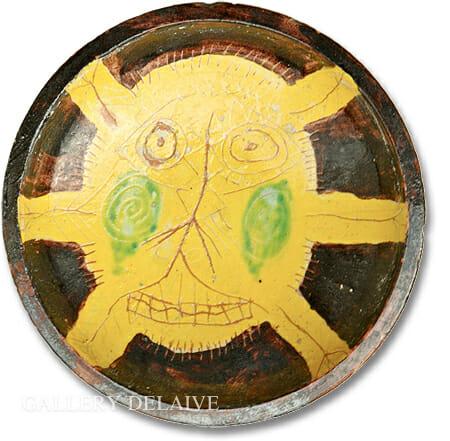
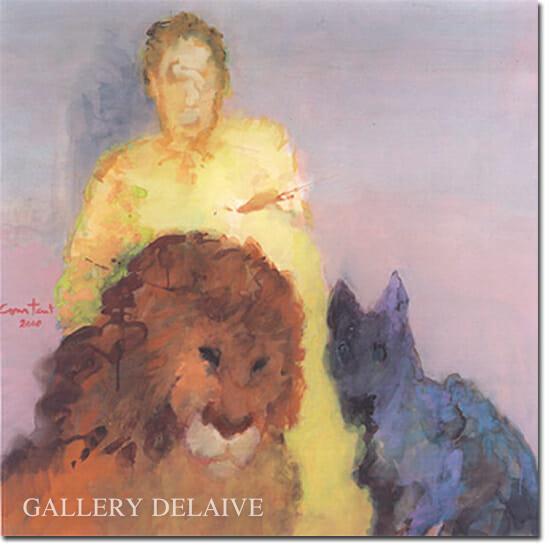
Constant (Constant Anton Nieuwenhuys) was born in 1920 in Amsterdam and started his career as a painter. Together with other experimental artist like Corneille and Karel Appel he founded the Dutch Experimental Group. Of the members Constant was the most important theorist and the most engaged in politics. During his stay in Paris in 1946 Constant met Asger Jorn, a Danish experimental artist, and they became friends. Jorn discussed his ideas about purely abstract art being an illusion and found a supporter in Constant. They both agreed on the need for an international experimental group and in November 1948 the CoBrA group (Copenhagen, Brussels, Amsterdam) was founded in Paris. Collectiveness, experiments and the struggle against the old conventions in art were the most important driving forces within CoBrA. Animals, primitive art, myths, the art of children and the mentally ill were significant sources of inspiration. After several exhibitions, of which Amsterdam 1949 and Liège 1951 were the most important ones, the CoBrA movement seized to exist and the artist went their own way. Constant also moved on. In 1952 he spent less and less time on painting and more time on his ideas about society and art. At that time he experimented with almost purely geometric forms in compositions. During his travels to London and Paris Constant developed theories about a new way of living and he decided to join Asger Jorn in his newly founded group called ‘Mouvement pour une Bauhaus imaginiste’. Around 1956 Constant became more and more interested in architecture which resulted in a project called New Babylon, the creation of the city of the future. He worked on the models of this city from 1956 until 1969 and they were first exhibited in 1962. Constant also had his own ideas about the humans that would live in these new surroundings. They would have a new consciousness and would be free and creative, not burdened by the old traditions in art. Constant has a critical attitude towards society and culture which has generated a diversity of artistic expressions. He has showed the ability to tackle problems and find creative solutions to these artistic difficulties. His recent paintings and watercolours show yet a different side of Constant. Compared to the subjects he used before these almost seem a little decadent. Perhaps, in a way Constant was influenced by Rubens, Titian and Cézanne. This use of softer colours one might not expect from Constant but yet again he proves that the end of his experiments is not in sight.
Constant died august 1, 2005 at the age of 85 in Utrecht, The Netherlands after a long illness.
